The Turkish Politics Specialist Group of the Political Studies Association invites submissions for the Autumn 2025 Turkish Politics Online Workshops, co-convened by Dr Aykut Ozturk (University of Glasgow) and Dr Digdem Soyaltin-Colella (University of Aberdeen).
Photo: Digdem Soyaltin-Colella
Turkish Politics Online Workshops are back!
We are happy to announce the call for submissions for the Autumn 2025 Turkish Politics Online Workshops organised by the Turkish Politics Specialist Group of the Political Studies Association (PSA). This online workshop series aims to provide detailed and constructive feedback for working papers on Turkish politics.
We recognize that publishing is essential to secure employment and promotion in academia. Our goal is to provide junior scholars of Turkish politics (PhD students, postdoctoral researchers, assistant professors, or mid-career researchers) with an opportunity to improve the quality of their manuscripts. We are open to all theoretical and methodological approaches to studying Turkish politics, including those from comparative, international relations, or foreign policy perspectives.
We are planning to organize three sessions in October and November 2025. Each sessionwill feature only one paper and last one hour. We expect the applicant to submit a full draft paper at least ten days before the seminar date. During the seminar, the presenter will make a brief presentation about the paper, no longer than 10 minutes. After that, the submitted paper will be discussed extensively by one or two discussants who are experts on the topic, co-convenors of the online workshop, and other attendees. The session will be finalized with a short Q&A session.
Scholars interested in presenting in the Turkish Politics Online Workshops series should send their draft papers to turkishpoliticspsa@gmail.com (Subject: Online Workshop Autumn 2025) by September 21st, 2025. We accept dissertation chapters and pre-analysis plans, as well as manuscripts written in the format of journal articles. We will prioritizemanuscripts that will benefit most from the workshop.
We will notify the successful applicants by the end of September.
We very much look forward to receiving your applications!
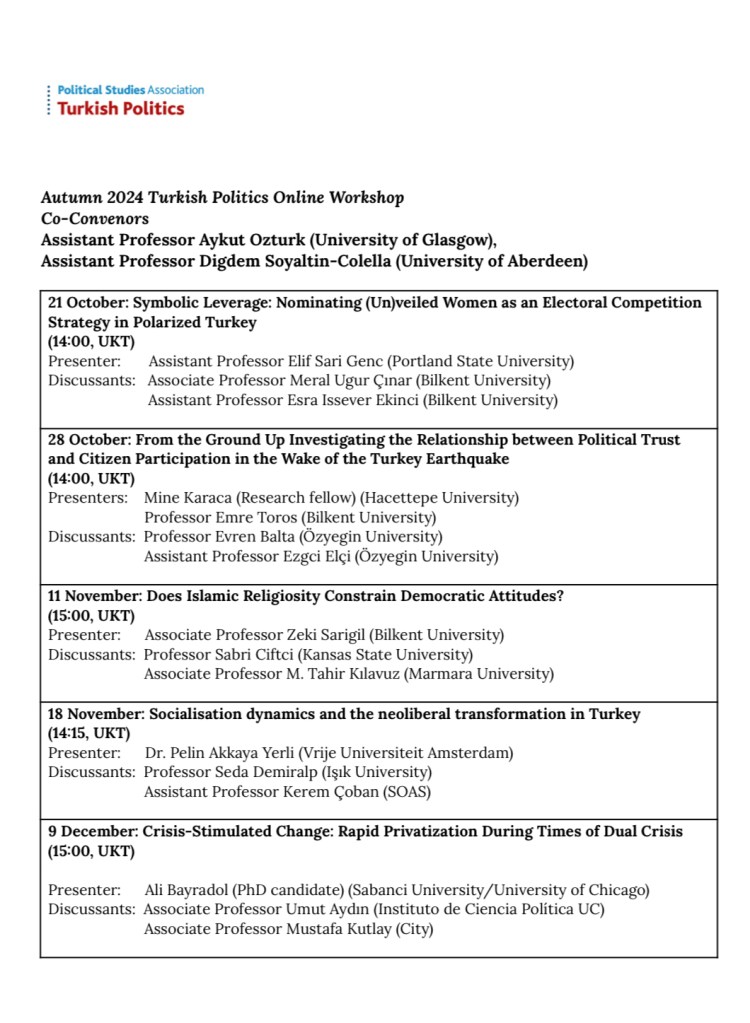
We are pleased to invite you to the Spring 2024 Turkish Politics Online Workshop, a forum for scholarly discussions on key political issues shaping contemporary Turkey. Organized by Assistant Professor Aykut Ozturk (University of Glasgow) and Assistant Professor Digdem Soyaltin-Colella (University of Aberdeen), this workshop is open to all academics and researchers with a focus on Turkish politics. The event will take place via Zoom.
The workshop is structured to provide detailed and constructive feedback on working papers, offering presenters the opportunity to engage critically with both scholars and participants. This collaborative environment is intended to support the refinement and advancement of ongoing research. Each session is designed to foster rigorous academic exchange and encourage interdisciplinary dialogue.
Please find below the programme for our Spring workshop. All of the events will take place at 15:00 UK time.
Meanings/Conceptualization of Democracy: A Political Ethnography in Kirklareli, Turkey
We are happy to announce the call for submissions for the Spring 2025 Turkish Politics Online Workshops organised by the Turkish Politics Specialist Group of the Political Studies Association (PSA). This online workshop series aims to provide detailed and constructive feedback for working papers on Turkish politics.
We recognize that publishing is essential to secure employment and promotion in academia. Our goal is to provide junior scholars of Turkish politics (PhD students, postdoctoral researchers, assistant professors, or mid-career researchers) with an opportunity to improve the quality of their manuscripts. We are open to all theoretical and methodological approaches to studying Turkish politics, including those from comparative, international relations, or foreign policy perspectives.
We are planning to organize five session in the Spring term.Each sessionwill feature only one paper and last one hour. We expect the applicant to submit a full draft paper at least ten days before the seminar date. During the seminar, the presenter will make a brief presentation about the paper, no longer than 10 minutes. After that, the submitted paper will be discussed extensively by one or two discussants who are experts on the topic, co-convenors of the online workshop, and other attendees. The session will be finalized with a short Q&A session.
Scholars interested in presenting in the Turkish Politics Online Workshops series should send their draft papers to turkishpoliticspsa@gmail.com (Subject: Online Workshop Spring 2025) by January 5th, 2025. We accept dissertation chapters and pre-analysis plans, as well as manuscripts written in the format of journal articles. We will prioritize manuscripts that will benefit most from the workshop.
We will notify the successful applicants by the 15th of January .
We very much look forward to receiving your applications!
Co-Convenors
Dr. Aykut Ozturk (University of Glasgow)
Dr. Digdem Soyaltin-Colella (University of Aberdeen)
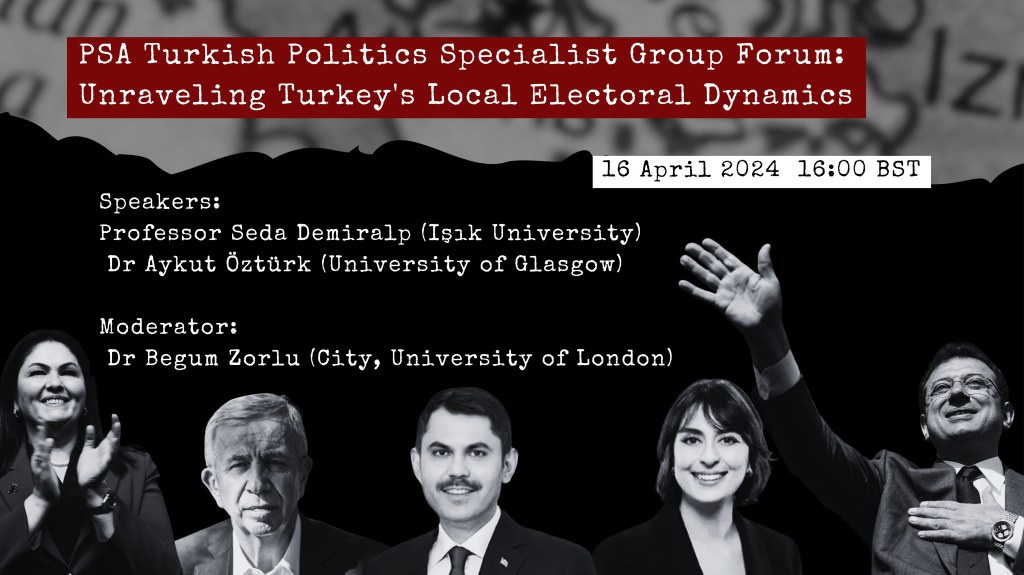
The PSA Turkish Politics Specialist Group cordially invites you to its online forum, where we will analyze the recent local electoral outcomes in Turkey.
The event will take place on April 16, 16:00-17:00 British Summer Time on Zoom.
We will be hosting Professor Seda Demiralp from Işık University and Dr Aykut Öztürk from the University of Glasgow, who will share their insights on the notable victories secured by the main opposition party in key cities such as Istanbul and Ankara, indicating a setback for the ruling AKP government. The presentations will be followed by a Q and A session.
Please find the joining link below.
Topic: Turkish Politics Specialist Group Local Election Forum Time: Apr 16, 2024 04:00 PM London
Turkey’s 2023 elections granted President Erdoğan another victory. Not only did he secure another five-year term as president, but the People’s Alliance he led obtained the majority of parliamentary seats. What are the fundamental dynamics and outcomes of the election process? How did Erdoğan and his coalition manage to claim victory? The view from PSA Turkish Politics for the PSA Blog.
Seda Demiralp (Isik University) argues that the election results were quite disappointing for opposition parties. She proposes that “opposition parties hoped to see that even in hybrid regimes where elections are not entirely free and fair, it is possible to change autocratic incumbents via elections.”
“Also, most observers had thought that Erdoğan had never been this close to losing an election over the past 20 years, mainly because of the major economic crisis Turkey has been going through and the February earthquake that destroyed various cities and took nearly 50,000 lives.”
Demiralp also proposes that many observers wrongly assumed that the structural conditions were so ripe for change that any opposition candidate could win.
She adds: “The opposition’s decision to form an alliance and pursue a campaign that focused on economic problems was promising. This new focus on economic issues contrasted with former campaigns prioritising a return to republican principles (such as secularism) and Western values, which hardly brought new voters in the past. However, the campaign had important shortcomings too.
Too many and diffused promises, lack of coordination among opposition leaders, and perhaps most importantly, opposition leader Kılıçdaroğlu’s lack of charisma to beat Erdoğan were among the main disadvantages of the opposition campaign.
Furthermore, Erdoğan’s campaign appeared relatively weak to many observers, raising hopes for the opposition. The massive economic crisis limited Erdoğan’s ability to focus on daily economic needs, in contrast to his past campaigns. Instead, he pointed at past accomplishments and presented himself not as a mere political figure but as a subject of love. Campaign videos asked voters to choose love (for Erdoğan) over material benefits and emphasised that Erdoğan could still pull the nation out of the economic crisis. Yet, Erdoğan’s killer move came later. In a rally one week before the elections, Erdoğan showed a doctored video demonstrating PKK militants cheering for Kılıçdaroğlu. Erdoğan claimed that Kılıçdaroğlu had allied with the PKK. His new message was that voters faced a choice between national survival and other issues. Kılıçdaroğlu failed to react to these accusations in a timely and effective manner. On May 14, to the surprise of many polling companies, Erdoğan and his People’s Alliance took the first-round lead.”
To end, Demiralp states that “with a desperate effort, Kılıçdaroğlu made a radical turn before the runoff. Not only did he adopt a harsh nationalist discourse, but he also embraced a negative campaign targeting Erdoğan. Yet, with his ill-prepared speeches, awkward masculinity performance and overly eclectic messages that made him look spiritless, he failed to turn the tables and lost in the second round.
Turkey’s 2023 elections failed to provide a model to change autocratic incumbents via elections. Yet, it provided important lessons about limits of economic voting, the role of agency, and the power of emotions over reason.”
Buğra Güngör (Geneva Graduate Institute) proposes that migration has shaped the debate. He argues that: “Even though millions of registered refugees and thousands of irregular migrants constitute one of the most simmering public and political debates, we observed that both incumbent and opposition leaders did not significantly bring them forth before the first round of the presidential elections.
However, as Dr Sinan Ogan, an opposition candidate who the right-wing and nationalist Ata Alliance nominated, has received more than five per cent of the votes that Erdogan and Kilicdaroglu could not secure the majority in the first round, Kilicdaroglu and other leaders of the Nation Alliance drastically switched to an anti-irregular migrant/refugee rhetoric to garner the support of the nationalist electorate – especially in Central Anatolia and Black Sea.”
“Although this strategy did not help Kilicdaroglu to win, it is highly likely that policies and rhetoric concerning the repatriation of irregular migrants and refugees will come back before the March 2024 municipal elections.”
“The existing level of political polarisation in the country would extensively shape the discourse surrounding the millions of refugees and thousands of irregular migrants. Therefore, certain parties would further use the migration issue in Turkey, making a better electoral performance.””
Begum Zorlu (City, University of London) argues that the international dynamics that shaped the electoral process deserve more attention. She states that: “especially how populism transcends borders and foreign policy becomes an arena where the incumbent claims competence has been vital in this electoral cycle.”
She underlines that primarily “the AKP’s populism at home is shaped by its global contestatory frames contributing to a boundary between us and them. Since the Gezi Protests of 2013, but especially after the 2016 coup attempt, the construction of the other has been vital in justifying securitisation, as the AKP elites link the political opposition with foreign threats through a populist framing.”
She adds: “Furthermore, the AKP elites repeatedly underlined how they had transformed Turkey into a global player and praised that they could negotiate with both sides in the Russia-Ukraine war.
While Erdoğan dominates the AKP’s foreign policy outlook, the opposition was more fragmented in raising a strong voice on where they stand on foreign policy.
This contributed to the incumbent framing itself as the solo agent that can maintain Turkey’s national interest.
We are sharing the call for papers for the joint panel hosted by Greek Politics and Turkish Politics Specialist Groups at the PSA Annual Conference 2023. The conference will take place at the University of Liverpool, between 3-5 April 2023.
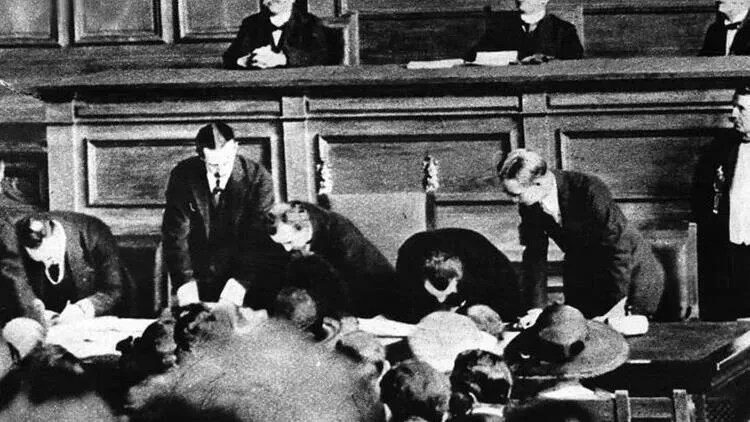
The Greek and Turkish Politics Specialist Groups of the PSA welcome papers for a joint panel, marking the centenary of the Lausanne Treaty in 1923. Taking stock of 100 years of bilateral relations, papers can cover any aspect of state formation in Greece and Turkey and relations between the two nations, including how the history of nationalism and state building impacts relations between the two countries today. Papers with a longitudinal focus covering both Greece and Turkey would be preferred within the general theme of “100 Years since the Lausanne Treaty: Reflections on State-Building, Nationalism and Peace.”
About PSA 2023
The PSA’s Annual Conference 2023 will be held at the University of Liverpool. It plans to combine both in-person and digital presentations. Therefore, we welcome papers which will be presented digitally as well as those which will be presented in-person (please state which format you would prefer in your abstract). Full conference details are available at this link.
Deadline
If you would like to be considered for inclusion in this joint panel, email us a 200-word abstract by the 26th of September 2022 to BOTH email addresses below.
If you have any questions or queries, please do not hesitate to contact us. turkishpoliticspsa@gmail.com v.tsagkroni@fsw.leidenuniv.nl
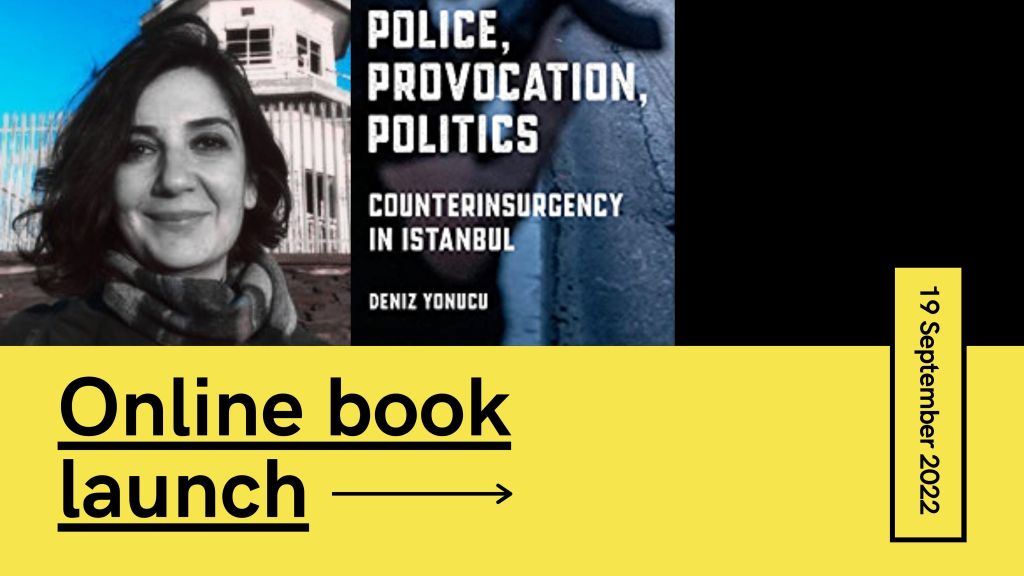
The event will take place on Zoom on Monday, 19 September 2022, 18:30 – 19:30 BST
The book will be discussed by Elif Babül, Associate Professor of Anthropology, Mount Holyoke College and Joost Jongerden, Associate Professor of Rural Sociology, Wageningen University.
The presentations will be followed by feedback from discussants and a Q&A session. Registration for the event can be made on Eventbrite.
About the Book
In Police, Provocation, Politics, Deniz Yonucu presents a counterintuitive analysis of contemporary policing practices, focusing particular attention on the incitement of counterviolence, perpetual conflict, and ethnosectarian discord by the state security apparatus. Situating Turkish policing within a global context and combining archival work and oral history narratives with ethnographic research, Yonucu demonstrates how counterinsurgency strategies from the Cold War and decolonial eras continue to inform contemporary urban policing in Istanbul. Shedding light on counterinsurgency’s affect-and-emotion-generating divisive techniques and urban dimensions, Yonucu shows how counterinsurgent policing strategies work to intervene in the organization of political dissent in a way that both counters existing alignments among dissident populations and prevents emergent ones.
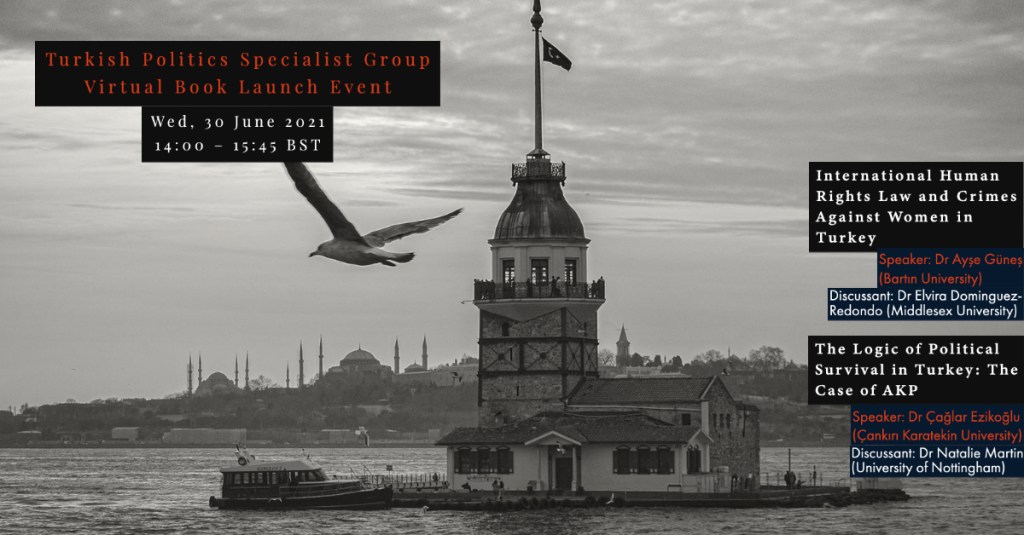
PSA Turkish Politics Specialist Group is inviting you to its first virtual book launch event in which Dr Ayse Güneş and Dr Çağlar Ezikoğlu will present their timely books on Turkish Politics.
The event is on 30 June 2021, 14:00 – 15:45 BST, and will take place on Zoom.
Yaprak Gürsoy has written a timely article to the PSA Blog on Turkey’s Covid19 response.
In her article she investigates Turkey’s record in fighting against COVID-19 and traces the political developments since the beginning of the outbreak.
We are republishing her article in our blog.
A MIXED RECORD FOR TURKEY’S POLITICSDURING COVID-19
Yaprak Gürsoy
1 July 2020
COVID-19 BLOG SERIES: HOW EUROPE HAS RESPONDED TO THE CRISIS
It is undeniable that we are undergoing unprecedented global change with the COVID-19 pandemic and these will have unpredictable political consequences for years to come. What will the winds of change bring to Turkey and to its personalistic regime?
There are two ways to answer this question. One way is to look at Turkey’s record in fighting against COVID-19 and the other is tracing political developments since the beginning of the outbreak. In both counts, Turkey appears to be quite stable. But looks can be deceiving. High tides under water have been kept at bay so far, however, 18 years of rule by the AKP has cultivated its simmering opposition that will only grow in time.
Measures against COVID-19
Turkey has had a total of just over 186,000 confirmed cases of COVID-19 as of 22nd June, making it the 11th most affected country in the world. Despite the high number of confirmed cases, its death rate remains significantly lower than other European countries, including countries like France and Belgium that appear to have fewer cases. Comparing the absolute number of confirmed cases across different countries is fraught with difficulties and all caveats around these figures need be kept in mind. Still# the relative success of Turkey begs clarification.
There is no simple explanation for lower death rates. There are still many unknowns about the nature of the virus that might explain Turkey’s statistics from a medical perspective. Certainly, Turkey’s demographics are in its favour – only eight percent of its population is over the age of 65 and most do not stay in care homes. Compare this to the EU average of 20% elderly population, or even higher in badly affected Italy, or consider the fact that in April alone official COVID-19 deaths in care homes in the UK were nearly twice as much as overall deaths in Turkey.
What of more short-term factors that were within the control of political leaders, notably when and to what extent to go into lockdown? Turkey’s approach to lockdown lies somewhere in the middle of a ‘restrictive-liberal’ continuum. It shut down schools and imposed a full curfew on the elderly and on children. It has also introduced a full lockdown on weekends and holidays. But if you were a Turkish citizen between the age of 20 and 65 or if you were working, it has been more or less business as usual, at least during the weekdays. Given this mixed approach that prioritised the economy, it is probably unlikely that curfew measures were what made the difference in death rates in Turkey.
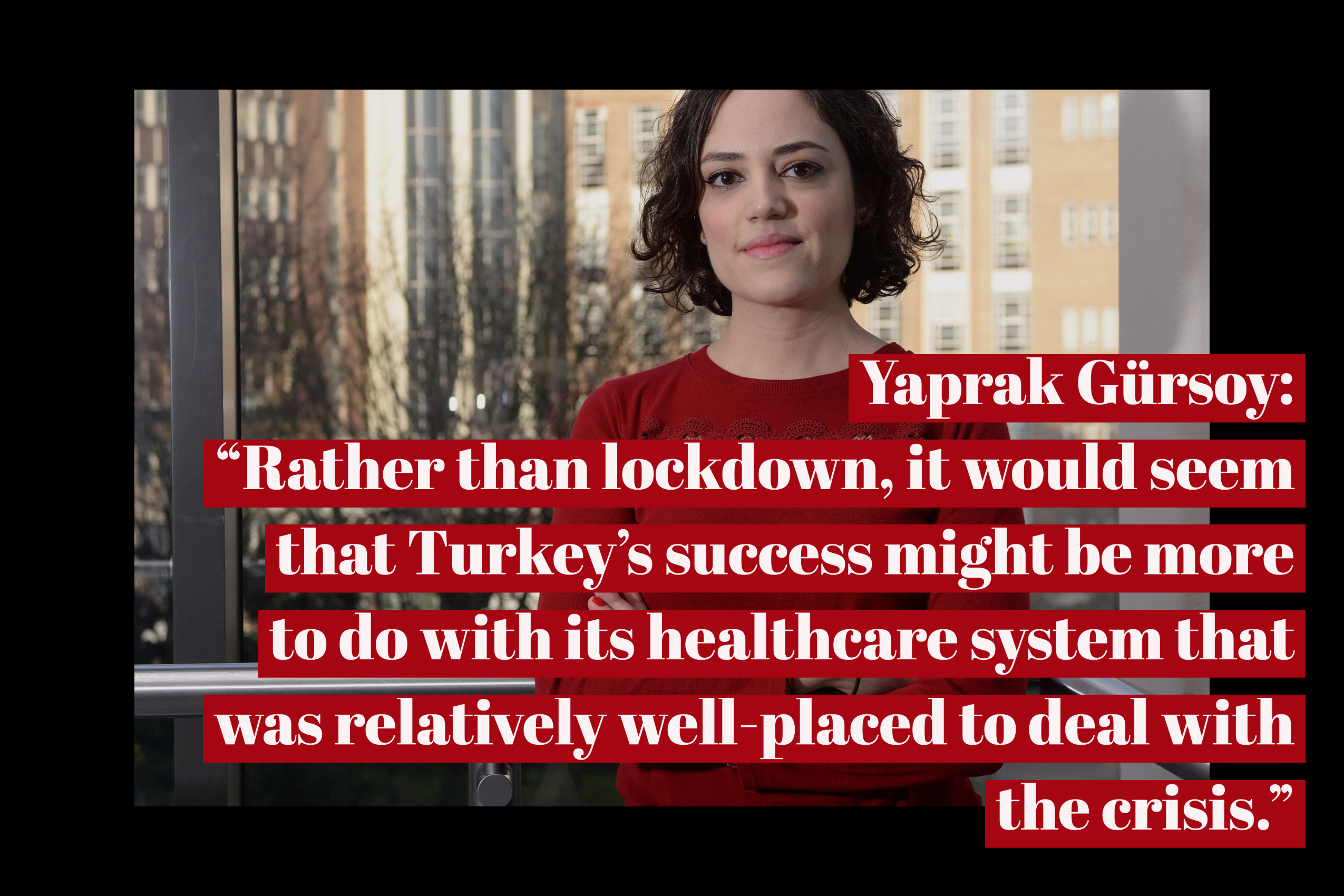
Rather than lockdown, it would seem that Turkey’s success might be more to do with its healthcare system that was relatively well-placed to deal with the crisis. The number of Intensive Care Unit beds in Turkey is four times more than Italy and nearly eight times more than the UK. This is, in part, down to the policies of the government in the past years. Some of these earlier policies, such as building city hospitals, have been controversial because they rest on neoliberal principles and reflect the extent of crony capitalism in Turkey. But in the combat against coronavirus, they have provided the capacity to admit suspected patients immediately, even before test results, and start aggressive treatment, even with the controversial drug of hydroxychloroquine. Also contact-tracing was introduced very quickly that tests patients within a day and notifies and monitors those with whom suspected cases have been in touch.
No matter where the real reason for Turkey’s low death rates lies, the government has been able to capitalise on the pandemic, increase its prestige abroad through supplying medical aid and tout the comparatively low death rates as a success. Although this trend can be reversed with the easing of lockdown measures and a new spike in cases, Ankara has managed to hold firm against the winds of change thanks to its seeming success in containing the virus so far.
Recent Political Developments
One of the major political consequences of the outbreak globally has been the way personal liberties had to be curtailed. The pandemic has led to illiberal policies everywhere with more than 80 countries declaring a state of emergency. Leaders are taking the opportunity to grab more power even in well-established democracies and it is unclear whether and when liberties will be returned to people.
Turkey has not been an exception to this global drift. Some of the political decisions that were made during the pandemic reflect earlier trends, mixed with new opportunities. For instance, around 90,000 convicts were granted an amnesty to prevent the spread of the virus in jails but political prisoners were exempted from the pardon. Opposition local governments in Istanbul and Ankara were forbidden from accepting donations from citizens to raise funds and distribute supplies to those who were in need. Five elected heads of local districts from the main Kurdish political party (HDP) were removed from office and the impunity of lawmakers were lifted paving the way for the prosecution of HDP MPs.
Centralising power by the ruling AKP and efforts to side-line political opposition are not new in Turkey. Although they might have been accelerated with the outbreak, they have also produced renewed opposition and initiatives, bringing in the potential of change amid seeming stability. For instance, there has been a cabinet crisis over the way curfew was initially introduced, which points at possible future fissures within the AKP government. There also seems to be an increase in the popularity of recently founded AKP-splinter parties. A recent poll also revealed that public trust toward Minister of Health Fahrettin Koca and Ankara Mayor Mansur Yavaş surpassed that of President Erdoğan. Finally, the HDP started a new campaign and has held rallies, despite government-imposed restrictions and COVID-19 related constraints.
Turkey has had a mixed record during the pandemic. If the death rates continue as they are, it is a positive case that needs to be acknowledged. However, this accomplishment should not distract from the general political trends of the recent years. For now, the pandemic seems to have brought more political stability than prospects for change. It is difficult to predict what will happen in a couple of years but, as in the anti-racism protests elsewhere, in Turkey too, the pandemic has brought its own dynamics of unforeseen transformation.
The Routledge Handbook of Turkish Politics is a far-reaching volume in which prominent scholars reflect on various aspects and disciplines of Turkish politics.
The handbook was brought together by Dr Alpaslan Özerdem, co-director of Centre for Trust, Peace and Social Relations at Coventry University, and Dr Matthew Whiting, lecturer in Comparative Politics at the University of Birmingham. It is composed of six sections and thirty-seven chapters. The chapters provide a description and characterisation of the key terms and concepts that are used in Turkish Studies.
The first two sections of the book, named “History and the Making of Contemporary Turkey” and “Politics and Institutions”, provide an in-depth analysis of the legacies of state-led modernisation, the changing institutional design of Turkey, the evolution of dominant ideologies, the development of civil society, and the transformation and the ownership of the media.
The third section of the volume, “the Economy, Environment, and Development”, focuses on the evolution of the Turkish political economy, followed by chapters on the dynamics of regional energy politics, the environment and climate change, the legacies of urbanisation, diaspora diplomacy and disaster management.
The fourth section is dedicated to
the Kurdish question where the authors investigate the historical background
and contentious dynamics of the issue, with chapters on the failed peace
process and the 15 July 2016 failed coup attempt.
The subsequent section, “State,
Society, and Rights”, looks at the state of human rights in Turkey, women’s
movements, minority rights, AKP’s policy on religious education and the
dynamics of healthcare.
The final section investigates the external relations of Turkey by situating Turkish foreign policy in a historical context and examining Turkey’s relationship with the Middle East, US, Russia and the EU. This section also investigates Turkey’s Cyprus policy, its endeavours in international humanitarian and development and its relationship with international organisations like NATO and the UN.

 Yaprak Gürsoy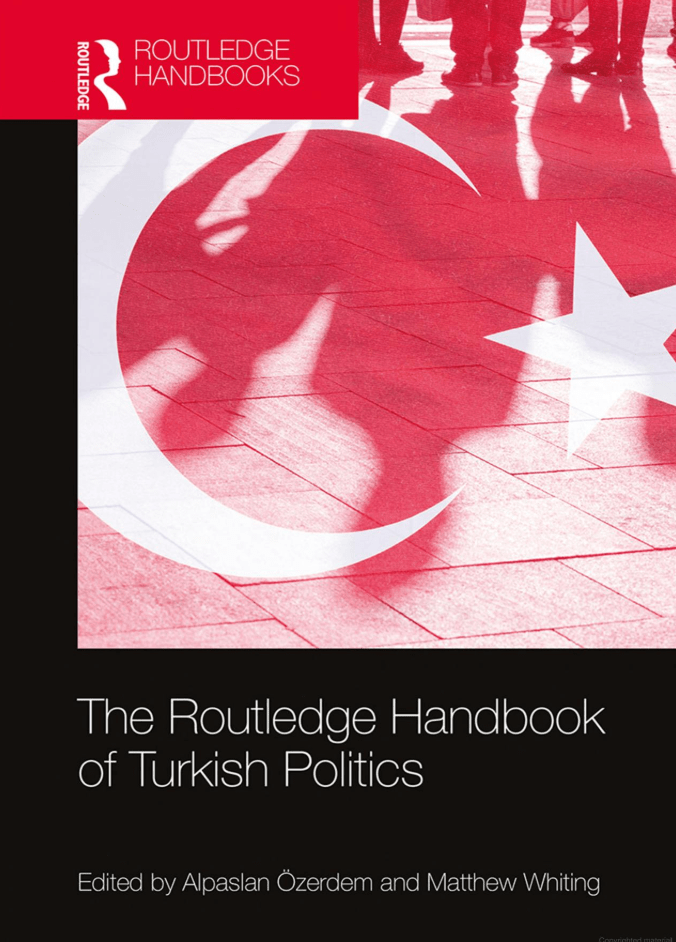
 PSA Turkish Politics Specialist Group