Call for Papers: The State of Democracy in Southern Europe

Photo by Cátia Matos on Pexels.com

PSA Greek, Italian, Spanish and Turkish Politics Specialist Groups, in conjunction with the ECPR Standing Group on Southern European Politics and the Aston Centre for Europe is organising a conference on “The State of Democracy in Southern Europe”

This conference aims to assess the current state of democracy and patterns of governance in five Southern European countries: Portugal, Spain, Italy, Greece and Turkey. It has been more than a decade since the Eurozone crisis began and 15 years since Freedom House first observed the retreat of democracy globally. Southern European countries have been at the centre of both events. The financial and political crises have gone hand in hand in Southern Europe and led to observable changes in party systems and regional politics. Taking account of the changes in these past years, the main goal of the conference is to comparatively evaluate relevant developments since the beginning of the 2000s, the reasons behind these, and the prospects of democracy and governance at the periphery of Europe.

The debate on the global decline of democracy has been conceptualized variously as democratic “decay”, “backsliding”, “deconsolidation” or “recession”. [1] Although there is no agreed-upon name, the main observation is the same. In many countries, democracy has undergone detrimental change, to the extent of passing the threshold of authoritarianism in some cases. This type of decline is often more difficult to observe than an abrupt transition from one regime to another. [2] This is perhaps why the debate on democratic decline in the literature has so far focused mainly on describing the change and what it means for the future of Western democracy. [3] Despite this conceptual richness, the literature on democratic decline has not yet been theoretically linked to the previous literature on transitions from democracy to authoritarianism; nor has it addressed the causes of the recent decline. [4]

Southern Europe holds the key to fill this gap in the literature. As the region where the Third Wave of democracy started, Southern Europe was the centre of attention for the transition paradigm, which dominated the literature in the 1980s and 1990s. In the past 15 years, Southern European countries were among the first to experience democratic decline and problems with effective governance, though some are perhaps also the first to show signs of recuperation.

The conference organisers are inviting papers that address these developments in Turkey, Greece, Italy, Spain and Portugal with the goal of explaining them in light of the earlier literature on regime change and the current analyses of global democratic decline. Comparative papers, as well as single case studies, are welcome.

Contributions should focus on one or more of the following dimensions:

  • Inter-party competition and party system change
  • Intra-party democracy (party organisations, role of leaders, role of members)
  • Institutions and effective governance, including relations between the executive, legislative and judicial branches of government and relations between central, regional, local governments
  • Role of the media, civil society, interest groups and/or non-governmental organisations
  • Role of citizens’ perceptions and support for democracy, including public opinion
  • Political behaviour, ranging from conventional means of participation (such as elections, referenda, etc) to unconventional methods (such as protests, rallies, violent acts, etc)

Paper titles and abstracts of 150-200 words, along with author names, institutional affiliation and contact details, should be sent to SouthernEuropeConference@gmail.com by Monday 16 March 2020. Limited amount of travel funding may be available. Authors will be informed about funding opportunities and the application process for travel grants after their papers are accepted.

Endotes

[1] See for instance Levitsky, S. & Ziblatt, D., How Democracies Die (New York: Crown, 2018); Foa, R.S. & and Mounk, Y., ‘The Signs of Deconsolidation’, Journal of Democracy, Vol. 28, No. 1 (January 2017), pp. 5-16, <https://www.journalofdemocracy.org/articles/the-signs-of-deconsolidation/>; Waldner, D. & Lust, E., ‘Unwelcome Change: Coming to Terms with Democratic Backsliding’, Annual Review of Political Science, Vol. 21 (May 2018), pp. 93-113; Diamond, L., ‘Facing Up to the Democratic Recession’, Journal of Democracy, Vol. 26, No. 1 (January 2015), pp. 141-155, <https://www.journalofdemocracy.org/articles/facing-up-to-the-democratic-recession/>.

[2] Levitsky & Ziblatt, How Democracies Die.

[3] See for instance the ‘Online Exchange on “Democratic Deconsolidation”’, Journal of Democracy, June 2017, <https://www.journalofdemocracy.org/online-exchange-democratic-deconsolidation/>. 

[4] Waldner & Lust, ‘Unwelcome Change’.

Call for Papers for Panels on All Aspects of Turkish Politics

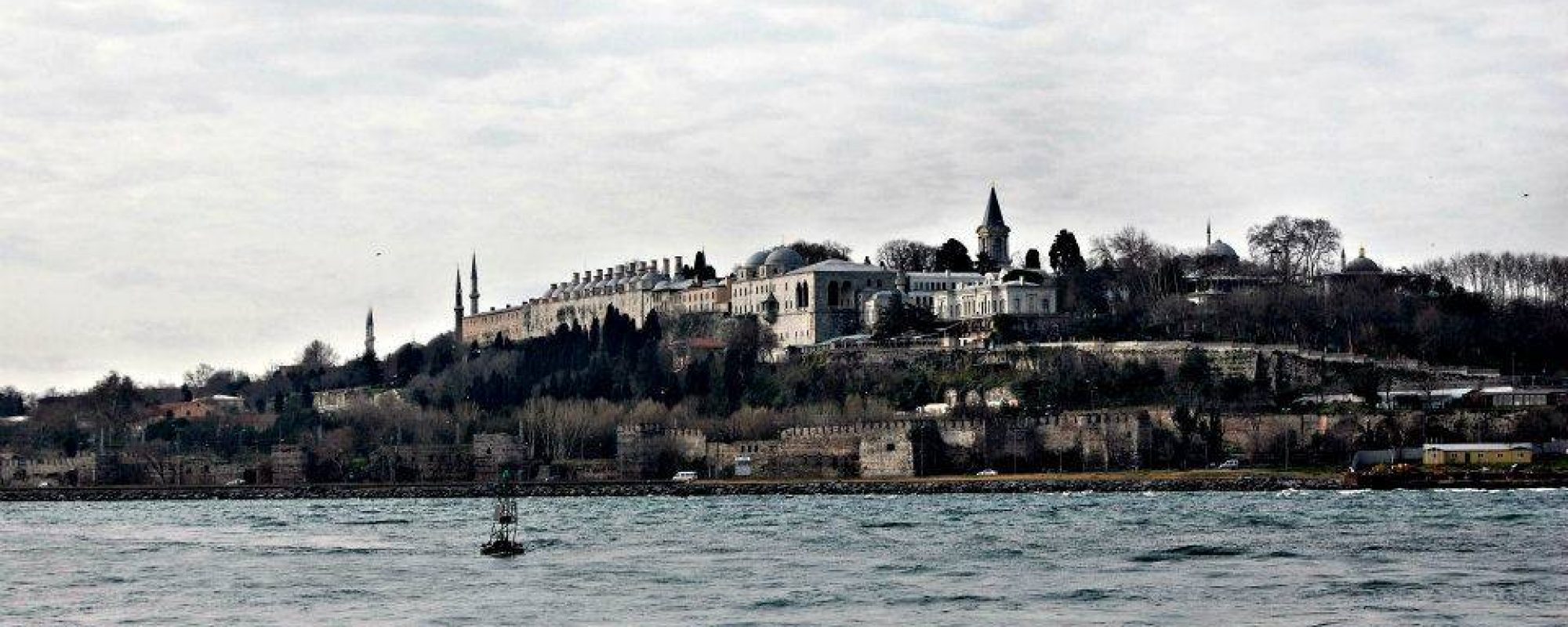
Photo by Burak K on Pexels.com

This year’s Political Studies Association Annual Conference will take place in Edinburgh in early April 2020 and, once again, we would like to convene a number of panels on Turkish politics.

The conference theme of ‘Re-imagining Politics’ is well suited to studies of Turkish politics – covering crises, uncertainty and challenges to politics and how we can conceptually explain political developments today. We welcome both empirical and theoretical work on all aspects of Turkish politics, broadly defined.

Deadline for paper proposals: 11th of October 2019

If you would like to apply, please e-mail your paper proposal (paper title, 200-word max abstract, institutional affiliation and full contact details) to Matthew Whiting (M.Whiting.1@bham.ac.uk) and Yaprak Gürsoy (y.gursoy@aston.ac.uk).

Full details of the conference can be found on the PSA website here

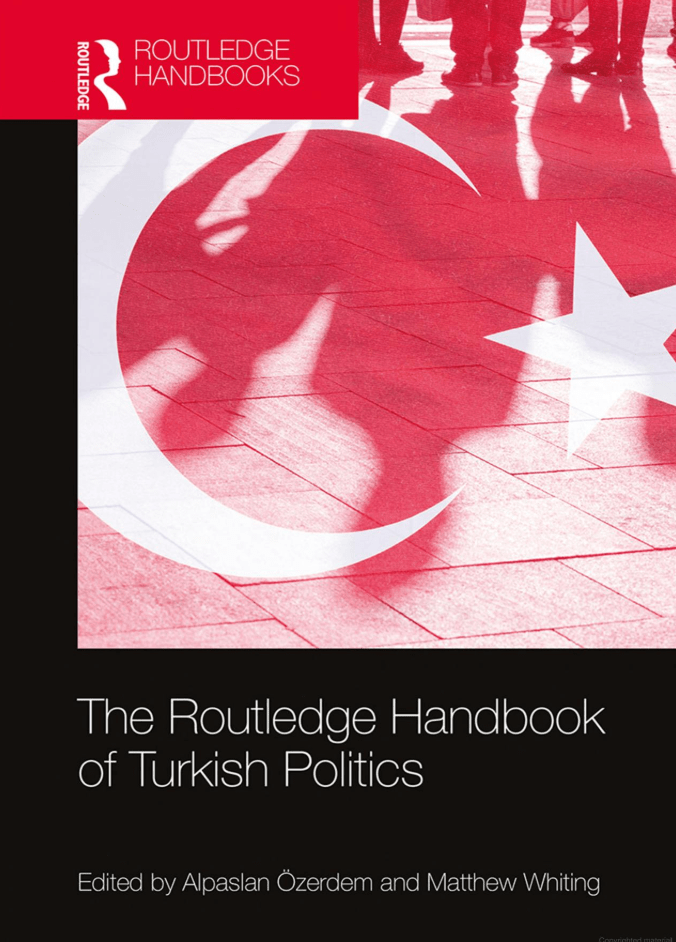
New Publication: The Routledge Handbook of Turkish Politics

The Routledge Handbook of Turkish Politics is a far-reaching volume in which prominent scholars reflect on various aspects and disciplines of Turkish politics.

The handbook was brought together by Dr Alpaslan Özerdem, co-director of Centre for Trust, Peace and Social Relations at Coventry University, and Dr Matthew Whiting, lecturer in Comparative Politics at the University of Birmingham. It is composed of six sections and thirty-seven chapters. The chapters provide a description and characterisation of the key terms and concepts that are used in Turkish Studies.

The first two sections of the book, named “History and the Making of Contemporary Turkey” and “Politics and Institutions”, provide an in-depth analysis of the legacies of state-led modernisation, the changing institutional design of Turkey, the evolution of dominant ideologies, the development of civil society, and the transformation and the ownership of the media.

The third section of the volume, “the Economy, Environment, and Development”, focuses on the evolution of the Turkish political economy, followed by chapters on the dynamics of regional energy politics, the environment and climate change, the legacies of urbanisation, diaspora diplomacy and disaster management. 

The fourth section is dedicated to the Kurdish question where the authors investigate the historical background and contentious dynamics of the issue, with chapters on the failed peace process and the 15 July 2016 failed coup attempt.

The subsequent section, “State, Society, and Rights”, looks at the state of human rights in Turkey, women’s movements, minority rights, AKP’s policy on religious education and the dynamics of healthcare.

The final section investigates the external relations of Turkey by situating Turkish foreign policy in a historical context and examining Turkey’s relationship with the Middle East, US, Russia and the EU. This section also investigates Turkey’s Cyprus policy, its endeavours in international humanitarian and development and its relationship with international organisations like NATO and the UN.  
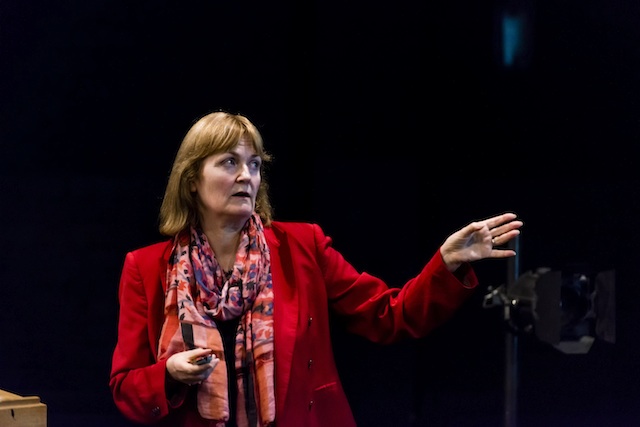
BATAS 2019 Lecture with Diana Darke

© Nela Pecher – Wikimedia Commons

The British Association for Turkish Area Studies (BATAS) has announced its speaker and date for the 2019 John Martin Lecture.

Middle East Expert and Author Diana Darke will give a lecture entitled “Turkey and Syria: deep past connections, deep present differences.” The lecture will take place at 6.30 pm on Friday, 22 November 2019 at the Tuke Common Room, Regent’s University, London. Diana Darke has written extensively on the Middle East and Syria. She is the author of My House in Damascus, The Merchant of Syria and co-author of The Last Sanctuary in Aleppo.

Some of her work can be seen on her personal website.

Further information about the event can be viewed on the BATAS Website.

PSA Annual Conference: Call for Papers

The call for paper and panel proposals for the 70th PSA Annual International Conference has been announced.

The conference will take place in Edinburgh between 6 and 8 April 2020. The deadline for submitting paper and panel proposals is Monday 21st October 2019.

If you would like to be considered for one of the Turkish Politics Specialist Group panels, please contact the co-convenors Yaprak Gürsoy and Matthew Whiting.

You can also see this post on the PSA website.

About PSA Turkish Politics Specialist Group

The Turkish Politics Specialist Group brings together scholars, researchers and academics interested in studying or hearing about Turkish politics.

The group holds workshops, seminars, panels and networking opportunities, both as PSA Annual Conference and through other events throughout the year. Although only recently established, the Turkish Politics Specialist Group builds on the already existing network of experts within the PSA and includes researchers at all stages of their career whose interests cover the historical and contemporary politics of Turkey, broadly defined. We are committed to engaging with cutting-edge empirical and theoretical research that enlightens our understanding of Turkey.  

Key areas of interest include, but are not limited to, democratisation and autocratisation, electoral politics, institutional change, the media, civil society, security and conflict, and foreign policy.  It is also one of the missions of the group to place Turkey in comparative perspective both within its neighbourhood and beyond. Through our events and up-to-date blog posts, we will facilitate and expand opportunities for network building and collaborative research. 

You can find our group on the “Specialist Groups” section of the Political Studies Association website. You can also learn about the types of membership that are available, along with the other rights and subscriptions that comes with becoming a member.

To join the group please Access here, follow us on twitter , or email us for further information.

Meet the Executive Team

bEGUM ZORLU

Begüm Zorlu is the co-convenor and chair of the PSA Turkish Politics Specialist Group. She is a Visiting Lecturer in the department of International Politics at City, University of London. Begüm’s research focuses on political parties and contentious politics in Latin America and the Middle East. She has also worked on the dynamics of peace processes and documentary photography. Her work can be seen on her personal website www.begumzorlu.com.

Buğra Güngör

Buğra Güngör is the co-convenor and chair of the PSA Turkish Politics Specialist Group. He completed his Ph.D. in International Relations and Political Science at the Geneva Graduate Institute. He also holds a master’s degree in Conflict Analysis and Resolution from Sabanci University and a bachelor’s in Philosophy, together with a minor degree certificate in Political Science, awarded by Bilkent University. In addition, he has extensive experience with managing development and humanitarian projects commissioned by various UN agencies, IOs, and INGOs in Switzerland and Turkey. Dr. Güngör’s research interests include conflict processes, soft power, public diplomacy, foreign policy analysis, and Turkish foreign policy. 

Özlem Kayhan Pusane 

Özlem Kayhan Pusane is the International Relations officer of the PSA Turkish Politics Specialist Group. She received her M.A. degree in Political Science from the University of Notre Dame in 2004, where she also received her Ph.D. degree in Political Science in 2009. She is currently an associate professor at Işık University (Istanbul, Turkey). Özlem’s broader research and teaching interests lie in the areas of traditional and critical security studies, civil-military relations, counterinsurgency, counterterrorism, and foreign policy analysis.

Seçkin Sertdemir Özdemir

Seçkin Sertdemir Özdemir is the events officer of the PSA Turkish Politics Specialist Group. She is a Collegium Researcher in the Department of Philosophy, Contemporary History and Political Science and Turku Institute for Advanced Studies at the University of Turku and Visiting Fellow in the European Institute at London School of Economics and Political Science. She is currently leading an interdisciplinary research project on new securitisation practices and modes of governance in Turkey. Her recent research was published in Punishment & Society, Journal of Refugee Studies, British Journal of Middle Eastern Studies. She can be contacted at sseozd@utu.fi.